Why Local Septic Services Matter for Fast, Reliable Help
A septic system is easy to ignore right up until it stops doing its job. Most homeowners do not spend much time thinking about what happens after a toilet flushes or a washing machine drains. They assume the system buried out in the yard will keep working quietly for years, and often it does. But when something goes wrong, the difference between a manageable service call and a full-blown property problem often comes down to one thing: how quickly a qualified local company can get there.
That is where local septic services earn their value. Speed matters, of course, but speed on its own is not enough. A fast response from someone who understands the soil, the permitting office, the age of neighborhood systems, and the common installation shortcuts used in the area is worth far more than a generic promise from a company based two counties away. Septic work is practical, location-specific, and unforgiving of guesswork.
Homeowners tend to think of septic service as pumping a tank every few years. That is part of it, but only part. Real septic support includes diagnosing backups, locating buried components, identifying drain field trouble, checking baffles and filters, managing emergency overflows, advising on repairs, and helping owners avoid repeat failures. Local providers are often better positioned to do all of that because they are already working in the same conditions your system faces.
When a septic problem cannot wait
A failing septic system rarely improves with time. Small symptoms often point to problems that are already underway underground. A toilet that gurgles, a sink that drains slowly, soggy grass above the drain field, or a sudden sewage odor near the tank can all signal a system under stress. If the issue is caught early, the fix may be relatively straightforward. If the response is delayed, wastewater can back up into the house, saturate the yard, or damage components that might otherwise have lasted years longer.
The urgency is not just about inconvenience. Untreated wastewater is a health risk. It can carry bacteria, viruses, and parasites that no homeowner wants anywhere near living spaces, pets, or children playing in the yard. Once sewage reaches flooring, drywall, insulation, or crawlspaces, cleanup becomes more complicated and expensive. What started as a service call can turn into remediation, restoration, and replacement work.
Local septic services usually respond faster because their trucks, staff, and routes are already nearby. That may sound obvious, but proximity changes outcomes. If a tank is backing up on a Friday afternoon before a holiday weekend, the company located fifteen minutes away has a real advantage over the one making promises from fifty miles out. In septic work, a few hours can be the difference between containing a problem and cleaning up after one.
Local knowledge is not a marketing slogan
Septic systems are deeply tied to local conditions. Soil type affects drainage. Water tables change by region and even by neighborhood. Older rural properties may have tanks installed decades ago with limited records. Newer subdivisions may have tighter setbacks, engineered systems, or access constraints that change how service is performed. A local technician often walks onto a property with useful context before opening a lid.
In clay-heavy areas, for example, drain fields behave differently than they do in sandy soil. In regions with heavy seasonal rain, otherwise healthy systems can become saturated and sluggish. In cold climates, frozen lines and winter access add another layer of complexity. A technician who regularly works those conditions tends to ask better questions and make better decisions. That matters when diagnosing whether a problem is caused by a full tank, a blocked inlet, root intrusion, a crushed pipe, hydraulic overload, or a failing field.
There is also the regulatory side. Septic work often intersects with local permitting, inspections, setback rules, and environmental requirements. A local company usually knows how the county handles repairs, what documentation is required, and when a simple service call becomes a job that needs formal approval. That familiarity saves time, but it also helps homeowners avoid missteps that can stall a repair or create trouble when selling the property later.
I have seen homeowners lose days because they called a distant provider who could pump a tank but could not navigate the local process for follow-up work. The pump-out bought temporary relief, but the underlying issue remained. A nearby company that knows the local workflow would have recognized the likely next step immediately.
Faster diagnosis often matters more than faster pumping
A common misconception is that every septic problem is solved by pumping the tank. Pumping is important maintenance, and in some emergency cases it provides immediate relief. Still, it is not a cure-all. If a line from the house is blocked, pumping the tank will not clear that line. If the outlet baffle is damaged, solids may continue moving where they should not. If the drain field is failing, an emptied tank can fill right back up once normal household water use resumes.
This is one of the clearest reasons local septic services matter. Experienced local teams often arrive with a practical diagnostic mindset. They have seen the same neighborhood patterns before. They know which older homes tend to have undersized tanks, which tree species commonly invade lines in the area, and which subdivisions were built during years when certain materials were more common.
That kind of pattern recognition is hard to quantify, but it has real value. Instead of treating every call as a blank slate, the technician starts with informed possibilities. That shortens the path to the right fix. It also protects the homeowner from spending money on temporary measures that do not address the true problem.
A reliable septic company should not be in a hurry to sell the biggest repair. Just as important, they should not default to the easiest service when the symptoms suggest more investigation. The better local providers know their reputation travels by word of mouth, especially in smaller communities. That often encourages a more careful diagnosis and a more candid explanation of options.
The hidden cost of waiting for a far-away provider
Homeowners sometimes call the least expensive number they find online, only to discover the low quoted rate does not reflect the actual cost once travel, after-hours fees, or repeat visits are involved. Distance affects more than arrival time. It also affects scheduling flexibility, follow-up service, and accountability.
If a technician has to drive a long route to reach your home, you are more vulnerable to delays from traffic, weather, earlier appointments running long, or simple route changes. If something needs to be rechecked the next day, getting that revisit may be harder. If the first visit reveals a repair beyond pumping, the company may not be equipped to return promptly with the right tools or crew.
By contrast, local septic services often have a tighter service radius and a stronger incentive to finish the job cleanly. They know they may be back in the same neighborhood tomorrow. They also know local real estate agents, builders, plumbers, and health department staff may hear about poor service quickly. In practical terms, that local accountability can improve communication and follow-through.
Price matters, no question. Septic work is not cheap, especially when excavation, field repairs, or component replacement are involved. But homeowners should think in terms of total cost, not just invoice amount. The cheapest initial call can become the most expensive outcome if delay, misdiagnosis, or weak follow-up turns a contained issue into a system failure.
Emergencies are easier to manage when the company already knows the territory
Septic emergencies have a way of happening at the worst possible time. Guests arrive for a holiday. Heavy rain hits after weeks of normal use. A house with a full family schedule suddenly cannot run showers, laundry, or dishwashing without backing up. In those moments, homeowners do not need a call center. They need someone who can tell them, clearly and quickly, what to stop using, how serious the issue sounds, and when help can realistically arrive.
Local providers tend to give more grounded advice because they know the area and the likely constraints. If recent storms have saturated fields across the county, they can say so. If certain roads are difficult for heavy pump trucks after rain, they know that too. If older neighborhoods commonly have buried lids deeper than expected, they can come prepared for extra digging rather than discovering that on site.
That preparedness affects speed in ways homeowners notice immediately. A well-run local crew often arrives with the right hose length, riser parts, probing tools, and enough familiarity to locate likely components efficiently. Time saved on site reduces stress, shortens exposure to unsanitary conditions, and improves the odds that the same visit will produce a useful answer.
Preventive care works better when there is a long-term relationship
The best septic service call is often the one that happens before there is an emergency. Routine pumping intervals vary depending on tank size, household size, water use habits, garbage disposal use, and whether the system receives proper care. Many homes do well on a schedule of roughly every three to five years, but that is a rule of thumb, not a universal law. Some households need more frequent service. Others can go a bit longer.
A local company that services the same property over time builds a maintenance history. They may know when the tank was last pumped, whether solids were unusually high, whether effluent filters tend to clog quickly, or whether access lids are difficult to reach. That record becomes valuable. It helps the technician spot trends instead of reacting to isolated snapshots.
Over the years, I have noticed that homeowners with an established local septic contact often make better decisions because they are not trying to learn everything in the middle of a crisis. They know who to call. The provider knows the property. Questions get answered earlier, before anxiety and odor take over the conversation.
This is especially helpful for households with edge-case conditions, such as seasonal occupancy, older tanks with uncertain capacity, homes that recently added bedrooms, or families caring for elderly relatives whose laundry volume has increased sharply. Septic systems respond to real water use, not assumptions. A local provider who understands how the home is actually used can offer advice that fits reality.
Not all properties fit the textbook
One reason septic work benefits from nearby expertise is that many systems are not neat, modern installations with clear maps and easy access. Rural properties often change hands several times without complete records. Landscaping may cover lids. Additions may alter traffic over buried lines. Trees planted twenty years ago may now have roots pressing into places nobody expected.
Then there are homes with mixed histories, perhaps an old tank, a newer pump chamber, a repaired lateral line, and a drain field that has survived longer than anyone thought it would. These are common situations, not rare exceptions. Servicing them well requires judgment.
A local septic professional may already know the installer who worked in that area years ago, or recognize the era-specific materials used in a particular development. That kind of field memory can spare a homeowner a lot of exploratory digging and unnecessary expense. It also helps when estimating how much life remains in aging components. No honest provider can predict exact failure dates, but experienced local technicians often give more realistic ranges because they have watched similar systems age under similar conditions.
What reliable local service looks like
Fast help matters, but reliability has its own markers. A dependable local septic company usually communicates in plain language. They explain whether the issue appears urgent, what temporary precautions to take, and what the likely next step will be. They give a time window they can reasonably meet instead of an empty promise. On site, they describe what they found and whether the remedy is maintenance, repair, or just a stopgap.
Homeowners should also expect practical transparency. If the system needs pumping, they should hear why. If more inspection is needed, they should hear what question the inspection is meant to answer. If the drain field appears compromised, the provider should say so without pretending a pump-out will solve it permanently.
A few signs tend to separate reliable providers from the rest:
- They ask thoughtful questions before dispatching, including symptoms, recent rainfall, occupancy, and whether fixtures throughout the house are affected.
- They understand local permitting and can explain when paperwork or inspection may be required.
- They discuss both immediate action and likely next steps, rather than treating the visit as an isolated event.
- They provide realistic maintenance guidance based on household use, not generic advice copied from a flyer.
- They have a reputation in the community that can be checked through neighbors, local contractors, or long-standing reviews.
That last point matters more than many people realize. A septic company does not need polished advertising to be excellent. Some of the most dependable operators are booked because plumbers, excavators, and homeowners trust them after years of solid work.
Local service supports property value too
Septic issues are not just maintenance concerns. They can become transaction issues when a home is refinanced, sold, or inherited. A poorly documented repair, an unresolved backup history, or evidence of long-term neglect https://mylespwgb970.opalvector.com/posts/why-local-septic-services-matter-for-fast-reliable-help can complicate inspections and negotiations. On the other hand, a property with a known service history and established local provider often inspires more confidence.
Buyers tend to be wary of private wastewater systems because they cannot see most of the infrastructure. When sellers can point to regular pumping, timely repairs, and service records from a known local company, that helps. It signals that the system has not been ignored. Even when a system is older, documentation and knowledgeable local evaluation can reduce uncertainty.
The same applies to homeowners planning additions or changes in occupancy. If a family wants to finish a basement, add a bathroom, or convert a home office into a bedroom, the septic system may need to support a higher load. Local septic services are often the first practical source of advice about whether the existing setup can handle those plans or whether upgrades may be needed.
A local provider can tell you when not to panic
One underrated benefit of having an experienced nearby septic company is perspective. Not every slow drain is a septic failure. Not every wet patch means the field is dead. Sometimes the issue is in the house plumbing. Sometimes a filter needs cleaning. Sometimes a tank is simply overdue for routine pumping after years of heavier-than-usual use.
A good local technician knows when a symptom is serious and when it just needs prompt attention without alarm. That helps homeowners avoid both extremes: neglect and overreaction. I have seen people spend money on unnecessary excavation because they assumed the worst, and I have seen others delay for weeks because they hoped the problem would disappear. Neither approach ends well.
Local providers who know common regional issues are often better at striking the right balance. They can say, in effect, this looks like a routine maintenance problem, or this has signs of something bigger and should be addressed now. That measured judgment is valuable, especially for homeowners new to septic systems.
Simple habits make service calls less urgent
Even the best septic services cannot protect a system from every misuse. Homeowners still play the largest role in day-to-day system health. Reasonable water use, proper waste disposal, and regular maintenance go a long way. The biggest problems often start with habits that seemed harmless at the time, such as flushing wipes, sending grease down the sink, running several high-water appliances back to back, or driving heavy equipment over buried lines.
A short set of habits prevents a surprising share of emergency calls:
- Pump the tank on a schedule that matches household use rather than waiting for symptoms.
- Keep wipes, grease, diapers, and other non-septic-safe materials out of drains, even if packaging says flushable.
- Spread out heavy water use, especially laundry, to avoid flooding the system all at once.
- Protect the drain field from vehicles, deep-rooted trees, and new structures.
- Call early when warning signs appear, because gurgling and odors rarely fix themselves.
Those steps are basic, but they are effective. They also work best when paired with a trusted local provider who can tailor advice to the property.
Why proximity, experience, and accountability matter together
What homeowners really want in a septic problem is not just a truck and a pump. They want competence under time pressure. They want someone who knows what to look for, who can explain it clearly, and who is close enough to matter when conditions turn urgent. That combination is exactly why local septic services remain so important.
Septic systems are intensely practical pieces of infrastructure. They do not reward delay, guesswork, or distant customer service. They reward local knowledge, repeated field experience, and a company that expects to stand behind its work in the same community next week and next year.
When homeowners choose a nearby provider with a solid track record, they are not simply buying convenience. They are buying a faster response, a better chance at accurate diagnosis, more useful maintenance guidance, and stronger accountability if the first fix is not the final answer. For something buried out of sight but central to daily life, that is not a small advantage. It is often the difference between a short disruption and a long, expensive mess.
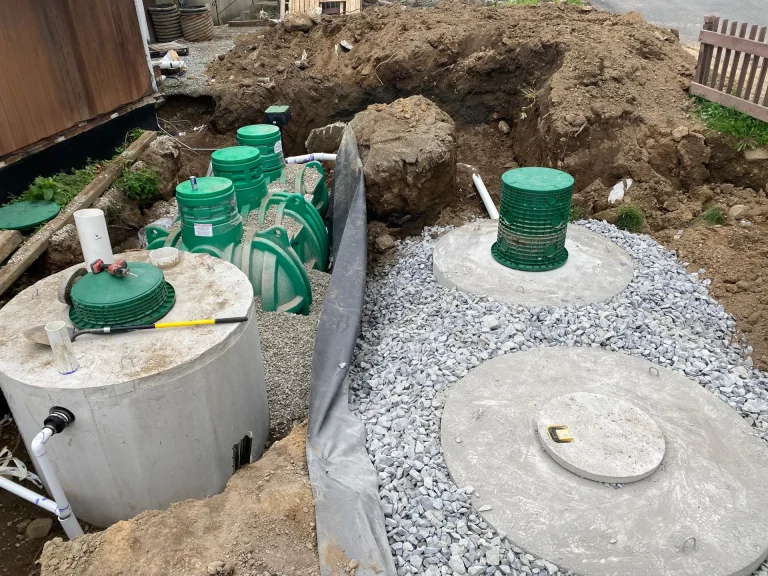
Excavating New Jersey LLC
Address: 406 County Rd 565, Wantage, NJ 07461
Phone number: +19737914284
FAQ About Septic Services
What is the average cost to get a septic tank emptied?
Emptying a septic tank costs between $290 and $560 on average, with most homeowners paying about $420. Prices vary based on tank size.
What is septic service?
Septic service inspects, pumps, cleans, and maintains a septic tank. A septic tank is a large, underground container that collects and treats wastewater from your home. Over time, sludge, scum, and other debris, like hair and solids, can build up in your tank and clog your drain field.
How often should you have a septic tank serviced?
A standard septic tank should be inspected every 1 to 3 years and pumped every 3 to 5 years. However, the exact schedule depends on your tank's capacity, household size, and daily water usage.